Coats of Arms, Heraldry
Posted: Thu Jun 25, 2026 7:18 am
I've semi-recently been getting into heraldry which has to do with the design, display, and study coats of arms (and related accoutrements). I think they look cool, have a lot of history, and also have funny medieval rules that make my nerd brain happy.
This thread is for sharing our favorite heraldry, creating our own, and otherwise talking about heraldry-related things.
Here's my favorite IRL one, the coat of arms of Zhelezhnogorsk, a Russian town founded during the Soviet era to produce plutonium:

Every coat of arms traditionally has a text description, or blazon, which functions as a kind of spec that tells an artist how to draw it. In Anglophone countries, the blazons use somewhat arcane language, which is kind of fascinating to read and learn. Here's what Zhelezhnogorsk's blazon might look like in English:
Gules, a bear Or, armed Argent, enclosed and supported by three electron orbitals Argent, bearing and opening a nucleus Argent.
Which is to say:
Red (background), with a Gold bear, with White claws, enclosed and supported by three electron White orbitals, bearing and opening a White nucleus.
Coats of arms can have all sorts of fun stuff around it, like that of astronaut and former Governor General of Canada, Julie Payette:

The blazon for just the shield is Per pale Azure and Sable a wing and in the canton the Royal Crown Argent. But there's also a helmet (an astronaut helmet!), a torse (the twist of cloth on top of the helm), mantling (the cloth flowing out of the torse), a crest that sits on top of the torse, supporters on either side of the shield, a motto on the bottom, and some other decorations that represent the Order of Canada and other state awards. You can see the full blazon for the whole thing at the Public Register of Arms, Flags and Badges of Canada.
In most countries with a heraldic authority, including Canada, you only get supporters if the government thinks you're really cool. In the UK, different helmets signify different ranks of nobility, though in Canada it can be whatever fits the bearer the most. Canada's heraldic rules are pretty relaxed, which allows for some pretty cool arms.
The Canadian heraldry office's website has this fun little guide to the history of heraldry, some of the design rules, and even activities for the kiddos. The Society for Creative Anachronism who might be the biggest organization of pre-17 C. LARPers also maintain their own heraldry, interestingly enough.
Heraldicon has a coat of arms editor that tries to generate a blazon for you; the UX is a little unintuitive, but it has a tutorial.
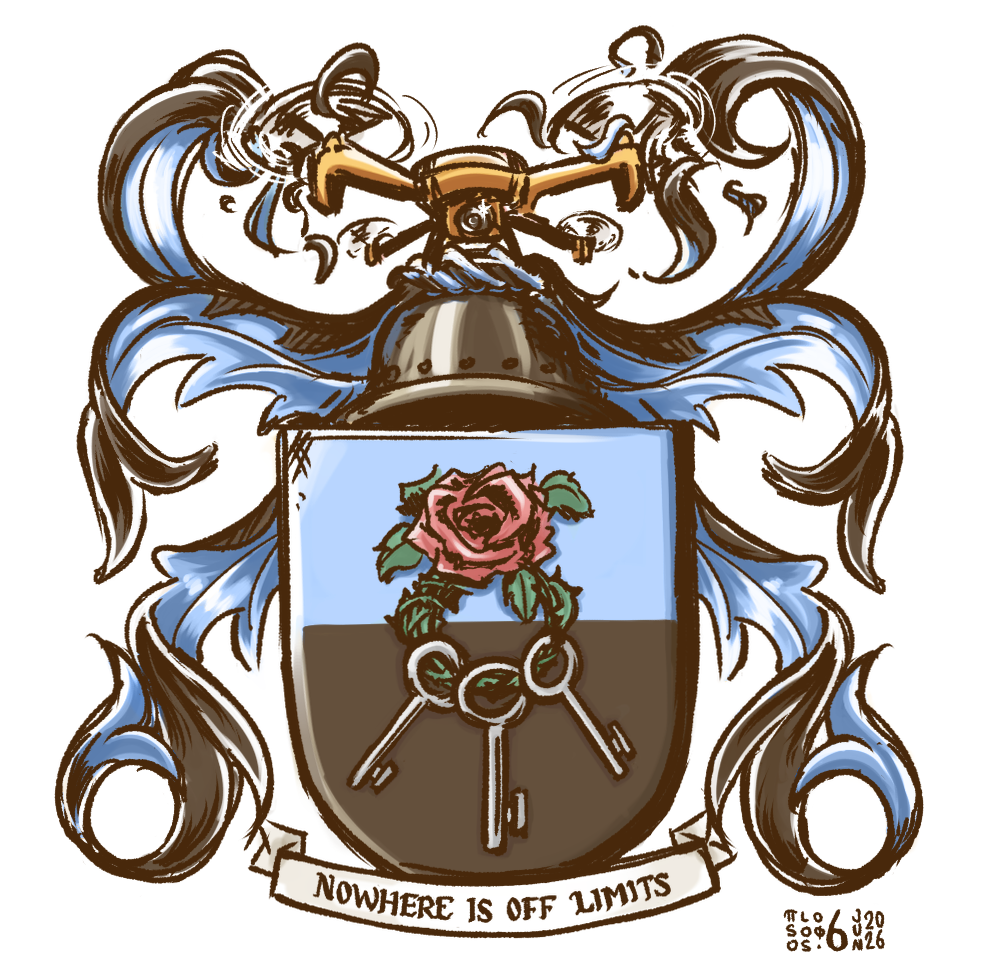
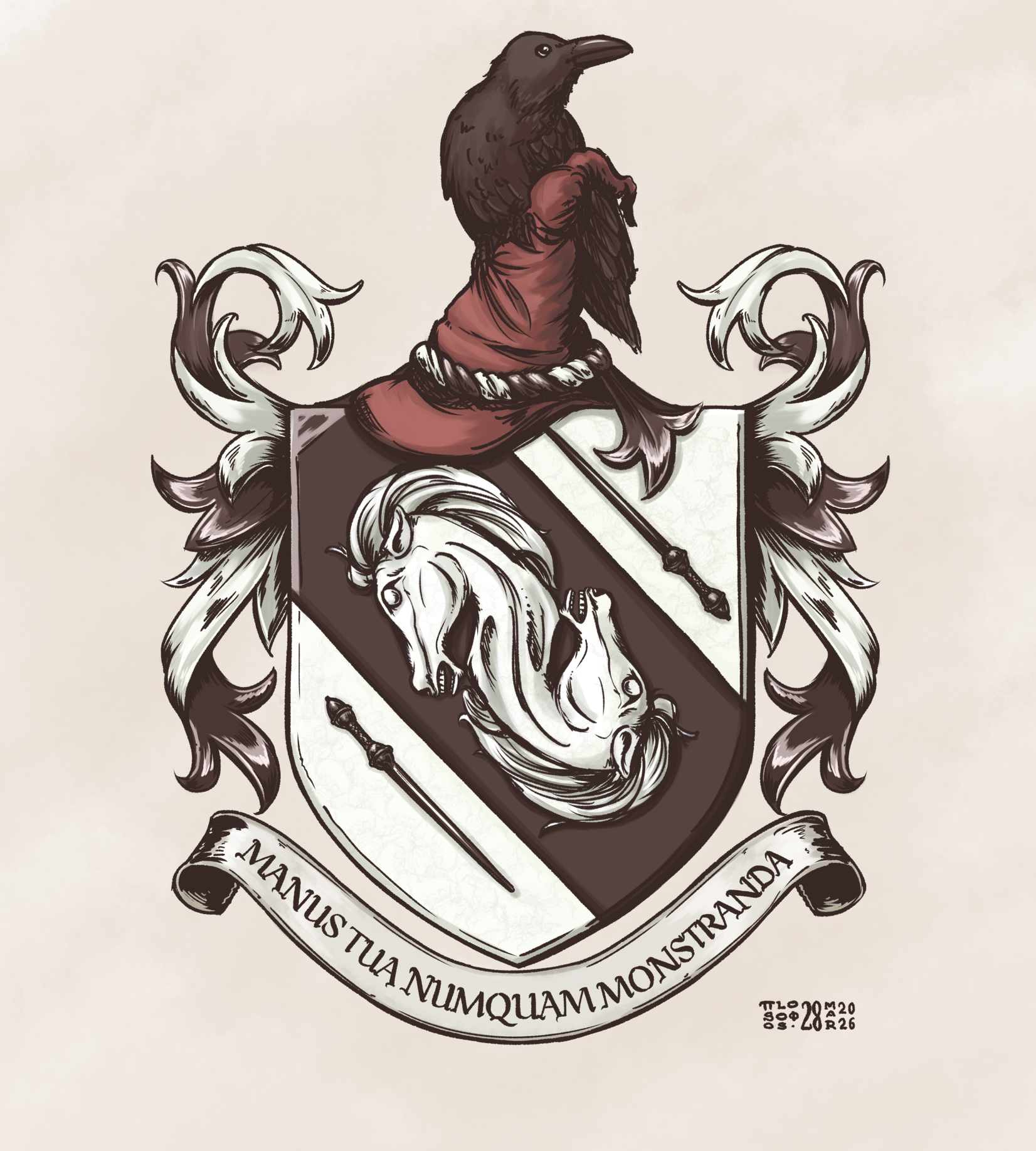
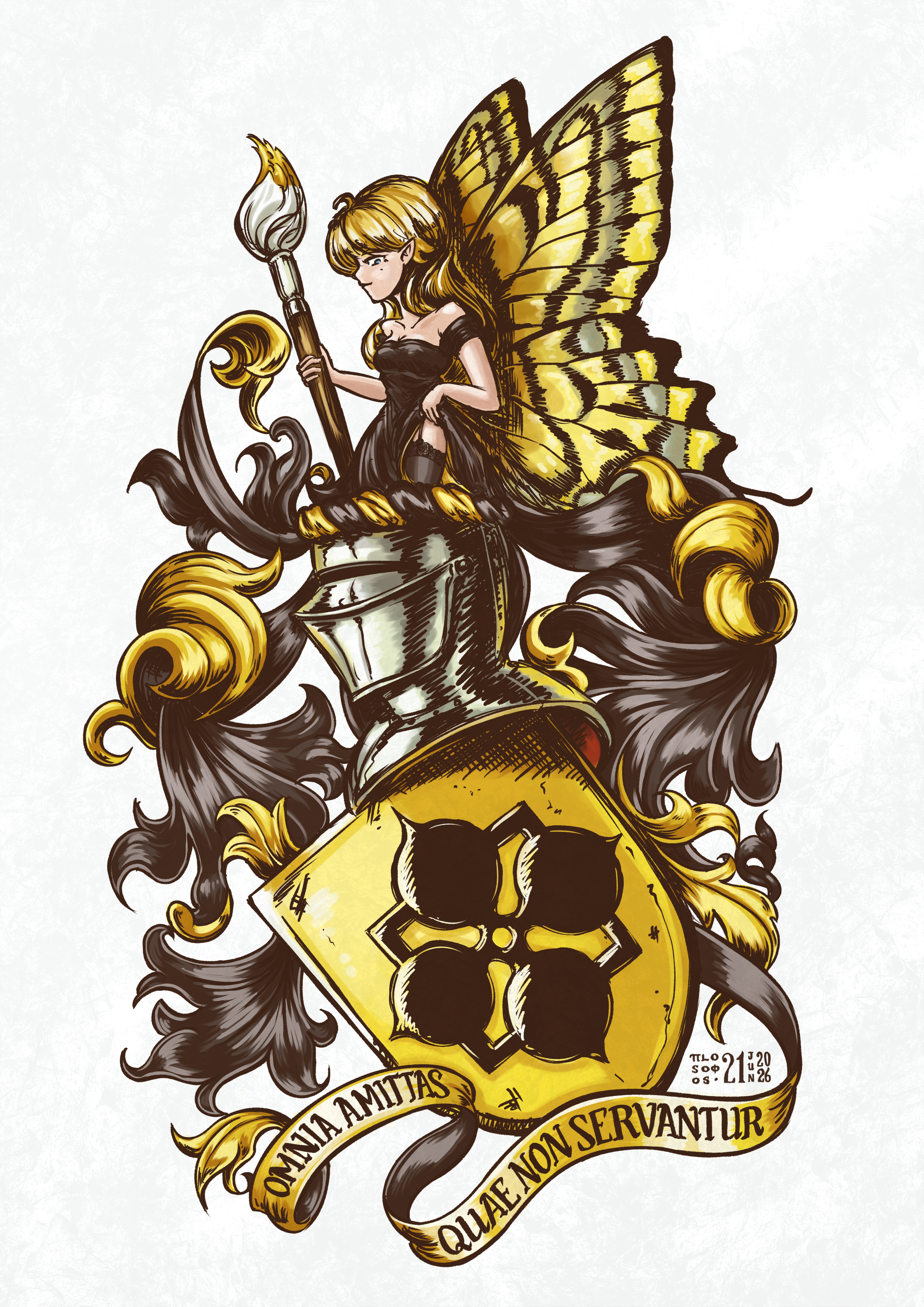
Go nuts! Design coats of arms! It'd be cool if we designed a bunch for ourselves and had a little tilde.town armorial or something.
This thread is for sharing our favorite heraldry, creating our own, and otherwise talking about heraldry-related things.
Here's my favorite IRL one, the coat of arms of Zhelezhnogorsk, a Russian town founded during the Soviet era to produce plutonium:
Every coat of arms traditionally has a text description, or blazon, which functions as a kind of spec that tells an artist how to draw it. In Anglophone countries, the blazons use somewhat arcane language, which is kind of fascinating to read and learn. Here's what Zhelezhnogorsk's blazon might look like in English:
Gules, a bear Or, armed Argent, enclosed and supported by three electron orbitals Argent, bearing and opening a nucleus Argent.
Which is to say:
Red (background), with a Gold bear, with White claws, enclosed and supported by three electron White orbitals, bearing and opening a White nucleus.
Coats of arms can have all sorts of fun stuff around it, like that of astronaut and former Governor General of Canada, Julie Payette:
The blazon for just the shield is Per pale Azure and Sable a wing and in the canton the Royal Crown Argent. But there's also a helmet (an astronaut helmet!), a torse (the twist of cloth on top of the helm), mantling (the cloth flowing out of the torse), a crest that sits on top of the torse, supporters on either side of the shield, a motto on the bottom, and some other decorations that represent the Order of Canada and other state awards. You can see the full blazon for the whole thing at the Public Register of Arms, Flags and Badges of Canada.
In most countries with a heraldic authority, including Canada, you only get supporters if the government thinks you're really cool. In the UK, different helmets signify different ranks of nobility, though in Canada it can be whatever fits the bearer the most. Canada's heraldic rules are pretty relaxed, which allows for some pretty cool arms.
The Canadian heraldry office's website has this fun little guide to the history of heraldry, some of the design rules, and even activities for the kiddos. The Society for Creative Anachronism who might be the biggest organization of pre-17 C. LARPers also maintain their own heraldry, interestingly enough.
Heraldicon has a coat of arms editor that tries to generate a blazon for you; the UX is a little unintuitive, but it has a tutorial.
Go nuts! Design coats of arms! It'd be cool if we designed a bunch for ourselves and had a little tilde.town armorial or something.